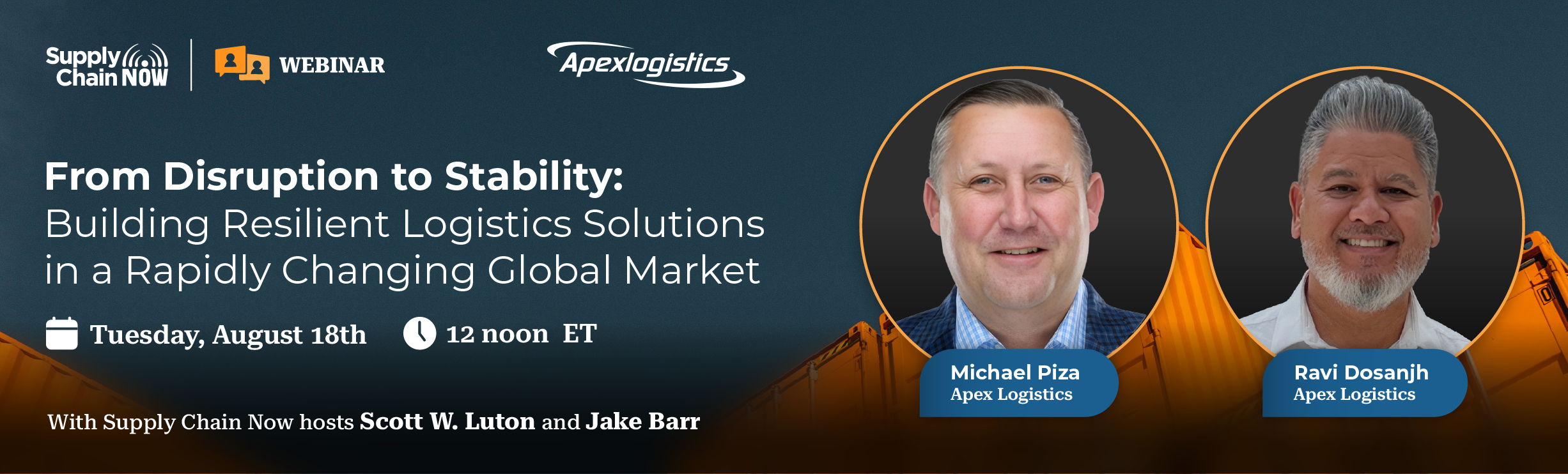
Companies cannot eliminate disruption, but they can design logistics strategies that reduce exposure, create optionality, and respond faster when markets shift. Let’s explore how industry leaders are adapting to geopolitical, technological, and economic disruption.
Key Takeaways:
What Stability Really Means in Logistics (Optionality, Visibility, Speed, Security, Partnerships)
How Shippers Should Prepare (forecasts, tiered service plans, alternative routings, using data to help decisions, not just tracking, choosing partners with execution depth)
Why cargo theft is a growing concern
How to incorporate tariff and customs compliance changes into your supply chain strategies
Senior Vice President- Corporate Business Development, Apex Logistics International, Inc.
Michael Piza is a thought leader in the logistics and supply chain space with over two decades of experience in logistics, freight forwarding, P&L management, and licensed customs brokerage.
Ravi Dosanjh
Vice President, Global Commercial Strategy, Apex Logistics International, Inc.
With nearly 30 years in logistics and supply chain, including senior roles at Intel, NNR Global Logistics, and Caliber Americas, Ravi brings deep expertise in building resilient, high-performing supply chains across varying sectors.